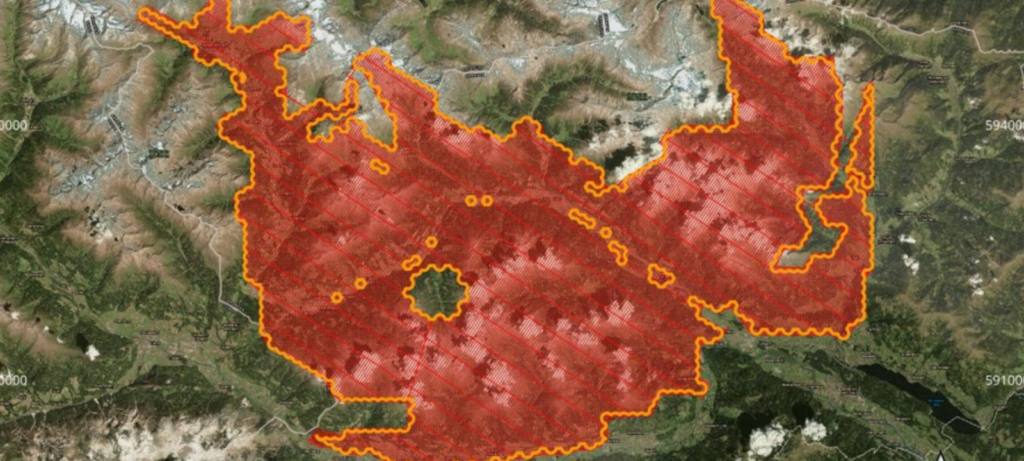
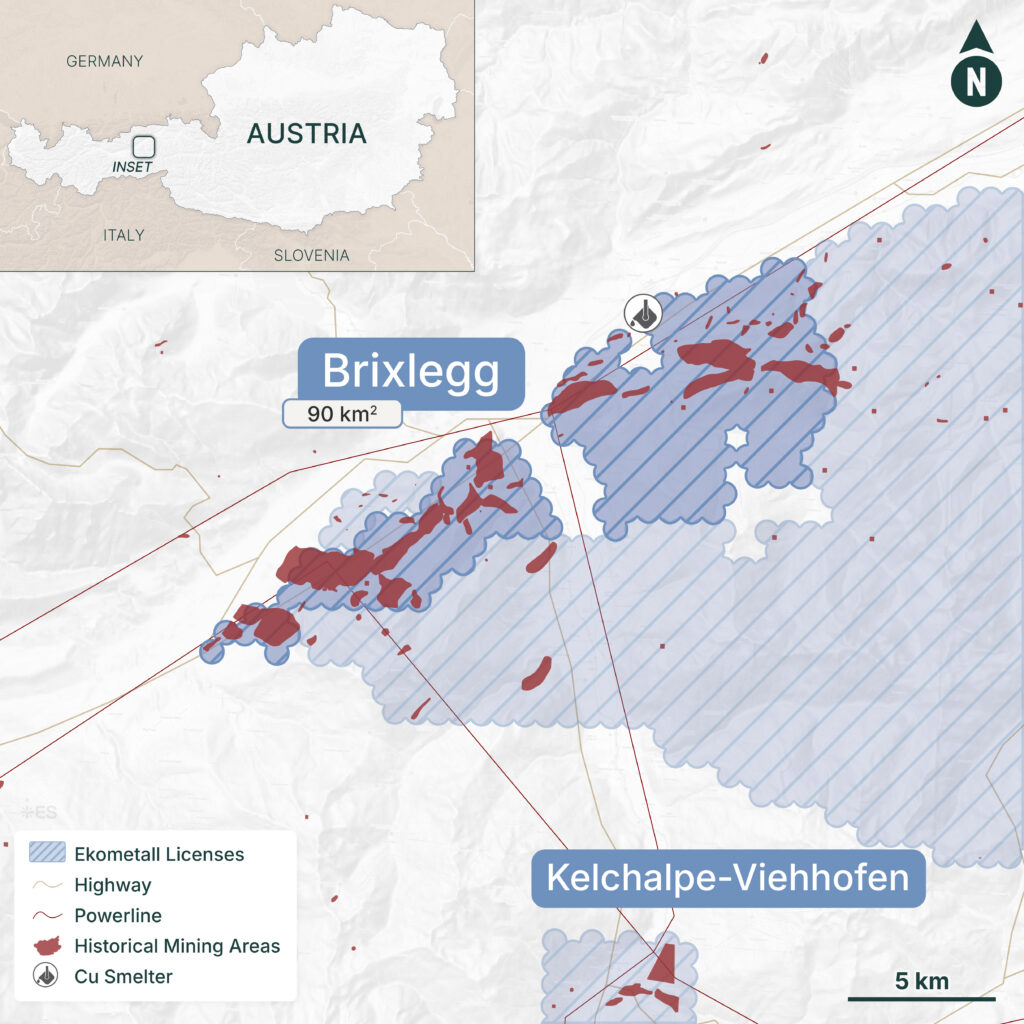
VIENNA, Austria – July 7, 2026 – Ekometall Inc., through its wholly owned subsidiary, Ekometall Exploration GmbH (“Ekometall” or the “Company”), today announced that it has acquired, via a transfer from a private third-party license holder, 118 exploration licenses (Freischürfe) covering 57 km² of the historical Schwaz-Brixlegg silver-copper mining district in the Lower Inn Valley of Tyrol. Ekometall has also staked additional exploration licenses surrounding the acquired package, bringing the Company’s license position in the “Brixlegg” area to a total 90 km². The acquired package extends across approximately 20 kilometres of strike along one of Central Europe’s most prolific historical silver-copper belts and adds a third major block to Ekometall’s Tyrol Group alongside the Company’s existing Kelchalpe and Matrei blocks.
Highlights
- Ekometall assembles a 90 km² Brixlegg project area (57 km² acquired plus adjacent staked ground) covering approximately 20 kilometres of strike in the historic Schwaz-Brixlegg silver-copper district of Tyrol;
- The district features extensive carbonate-hosted fahlore (tetrahedrite-tennantite) mineralization and, together with the nearby Röhrerbühel district at Kitzbühel, produced an estimated half of the silver and copper mined in the 16th-century Holy Roman Empire*;
- The Falkenstein mine yielded an estimated 3.75 million marks of raw silver (on the order of 1,000 tonnes) between the 15th and 19th centuries, and ranked among the world’s largest silver mines during its early-to-mid 16th-century peak**;
- Licenses cover the principal historical mining centers across the district, including Falkenstein, Ringenwechsel, Geyer, Silberberg, Mehrerkopf, and Ramsberg***;
- Target commodity suite includes copper, silver, and antimony, with antimony designated a critical raw material under the EU Critical Raw Materials Act;
- Brixlegg acquisition expands Ekometall’s Tyrol Group to three license blocks alongside Kelchalpe (1,775 km²) and Matrei (317 km²), reinforcing Ekometall’s position in one of Austria’s most historically productive metallogenic corridors.
“The Schwaz-Brixlegg district is one of the most prolific mining districts in European history, one that has never been systematically explored and tested with modern exploration methods,” said Ryan Finlay, CEO of Ekometall. “Acquiring these licenses spanning the entire strike of the district deepens our exposure to the EU-designated critical minerals suite, particularly antimony and copper, and further solidifies our first-mover position in Austria. The scale of historical silver production here is extraordinary, and our technical team is very eager to get into the field to generate our own modern data and results.”
A District of Historical and Geological Importance
The Schwaz-Brixlegg district is a ~20 kilometre east-west mining belt in the Lower Inn Valley of Tyrol, hosting one of the most historically significant base and precious metal accumulations in Central Europe. It contains two principal subdistricts: Schwaz in the west and Brixlegg in the east, both sharing a common host rock (Lower Devonian Schwaz Dolomite), a common ore mineral (fahlore, the tetrahedrite-tennantite series), and a common late-Alpine structural hydrothermal history.
The district’s economic significance was most prominent during the 16th century, when Schwaz, together with the nearby Röhrerbühel district at Kitzbühel, produced an estimated half of all the silver and copper mined in the Holy Roman Empire. At its zenith, Schwaz was among the largest towns in the Austrian Habsburg lands after Vienna, with a population estimated at around 20,000, and its silver production, financed through the Fugger banking house of Augsburg, underwrote the imperial ambitions of Maximilian I and Charles V. Mining continued at reduced intensity into the modern era. The Montanwerke Brixlegg smelter remains in operation today, processing copper from both primary and secondary feedstocks.
Geology and Deposit Style
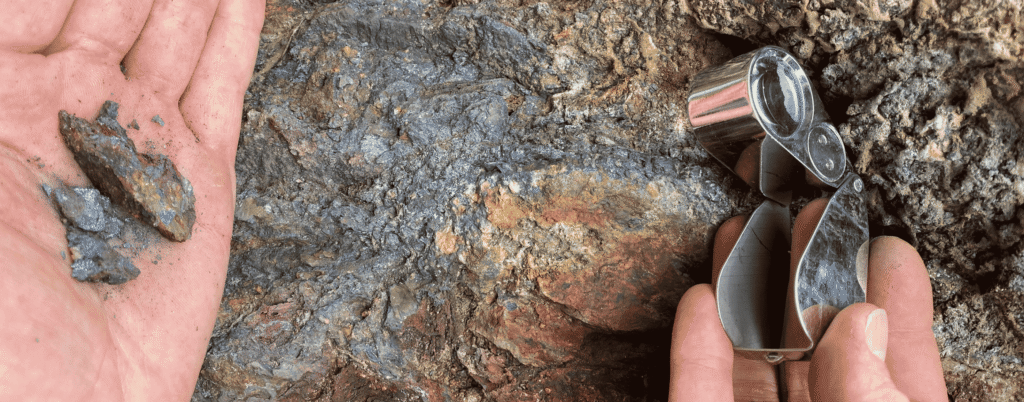
The Schwaz-Brixlegg district is the type and reference example of a distinctive deposit style, carbonate-hosted, fahlore-dominated mineralization, with few direct analogues worldwide. The principal ore mineral is silver and mercury-bearing tetrahedrite-tennantite, locally with up to ~0.5 wt% Ag (the variety “freibergite”) and substantial mercury contents in the type-locality variant “schwazite.” Mineralization occurs as stratabound horizons, discordant veins, and breccia-hosted bodies within the Lower Devonian Schwaz Dolomite, structurally controlled by late-Alpine transtensional reactivation along the Inn Valley Fault.
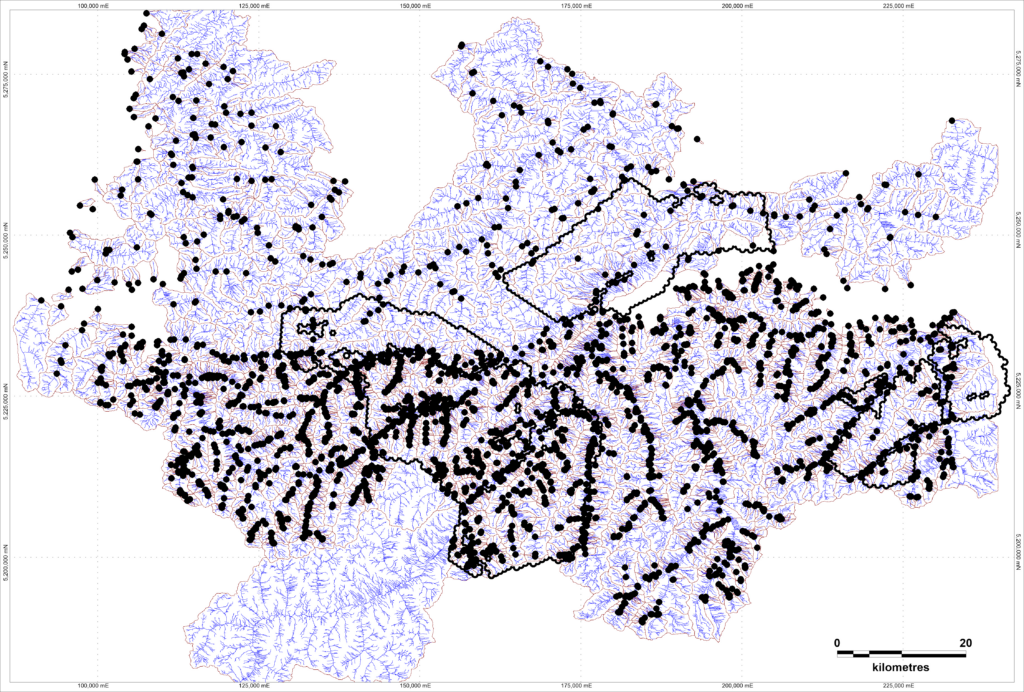
Vein dimensions and ore grades reported in the historical literature vary by sector and by individual working; these figures are historical in nature, have not been verified by a qualified person, and are not necessarily representative of mineralization within the acquired license areas. Compilation of this record is already well advanced: AI-assisted digitization of the historical archive has identified more than 70 documented mining occurrences within the acquired license area, linked to more than 160 indexed historical source documents, and initial field prospecting on the new licenses is underway.
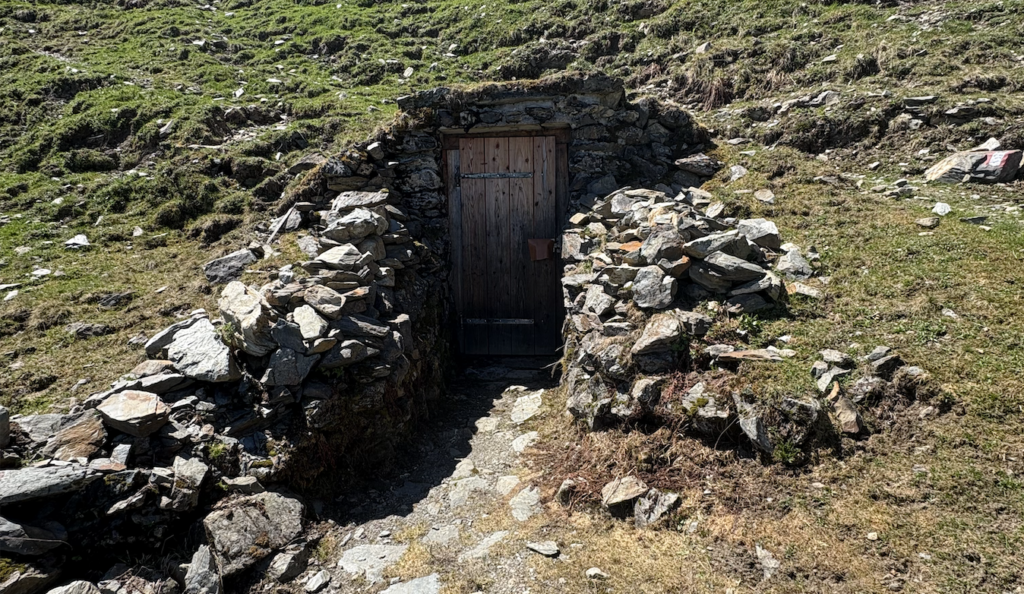
The acquired license package covers the principal historical mining centers across the full district strike, including Falkenstein in the Schwaz sector and Geyer and Silberberg in the Brixlegg sector, together with the historical Ringenwechsel, Mehrerkopf, and Ramsberg workings. Each of the historical mining centers named above now falls within Ekometall’s acquired exploration license area and is held exclusively by the Company for exploration. As with all Austrian exploration licenses, the acquired Freischürfe grant Ekometall the exclusive right to explore for minerals within the license boundaries under MinroG. They do not, on their own, convey ownership of the historical underground workings, surface infrastructure, or the land itself, which remain subject to separate property and mining-title arrangements.
Strategic Importance: Critical Raw Materials
The district’s polymetallic signature is dominated by copper and silver, with substantial antimony and minor lead, zinc, and barium. Antimony is listed as a critical raw material and copper as a strategic raw material under the EU Critical Raw Materials Act (CRMA); strategic raw materials are the 17-material priority subset of the Act’s 34 critical raw materials. Both designations reflect Europe’s structural dependence on imports for metals essential to the energy transition. Antimony is a fundamental structural constituent of tetrahedrite, the dominant fahlore mineral across the district, making Schwaz-Brixlegg a natural exploration target for the metal.
Tyrol Group Expansion
The 90 km² Schwaz-Brixlegg block is the third in Ekometall’s Tyrol Group, joining Kelchalpe (1,775 km², Cu-Au-Co) and Matrei (317 km², Cu-Pb-Zn). Together, the Tyrol Group now spans three of Tyrol’s historically productive mining areas: the Kitzbühel copper district at Kelchalpe, the Brenner corridor at Matrei, and the Inn Valley silver-copper belt at Schwaz-Brixlegg.
About Ekometall
Ekometall is an emerging critical minerals exploration company focused on unlocking Austria’s significant precious and base metal potential across the country’s historic mining districts. The company has assembled a specialized, Austria-based technical team that applies AI-assisted analysis to digitize and interpret over five centuries of previously inaccessible geological records, transforming archival data into actionable exploration targets.
With a dominant first-mover land position exceeding 10,000 km² and a demonstrated ability to efficiently permit and execute drilling programs, Ekometall offers global mining partners a compelling entry point into a favorable European jurisdiction. The company’s combination of local expertise, modern exploration methods, and extensive mineral tenure establishes Ekometall as the essential gateway for accessing the critical raw materials vital to Europe’s energy transition and industrial future.
For more information, visit ekometallgroup.com.
Contact
For more information on Ekometall’s projects or for investor relations inquiries, please contact:
Ryan Finlay
Managing Director & CEO
e. rfinlay@ekometallgroup.com
m. +1 703 229 2312
Click here to book a meeting with Ryan
* Arlt, T. and Diamond, L.W. (1998): Composition of tetrahedrite-tennantite and “schwazite” in the Schwaz silver mines, North Tyrol, Austria. Mineralogical Magazine, Vol. 62(6), pp. 801-820; Westermann, E. (1986): Zur Silber- und Kupferproduktion Mitteleuropas vom 15. bis zum frühen 17. Jahrhundert. Der Anschnitt, Vol. 38, pp. 187-211; European Fugger Road cultural route, “Schwaz” (fuggerstrasse.eu).
** Gstrein, P. (2005): Überblick über die geschichtliche Entwicklung des Bergbaues am Falkenstein bei Schwaz/Tirol. Berichte der Geologischen Bundesanstalt, Vol. 65, pp. 65-67; Egg, E. (1971): Schwaz, aller Bergwerke Mutter. In: Beiträge zur Geschichte Tirols, Tyrolia, Innsbruck, pp. 259-298; Silberbergwerk Schwaz historical archive (silberbergwerk.at).
*** Grundmann, G. and Martinek, K.-P. (1994): Die Mineralvorkommen des Bergbaugebietes Schwaz-Brixlegg. Lapis, Vol. 19(7-8), pp. 28-40; Hanneberg, A. and Schuster, H. (1994): Geschichte des Bergbaus in Schwaz und Brixlegg. Lapis, Vol. 19(7-8), pp. 13-21; Pirkl, H. (1961): Geologie des Trias-Streifens und des Schwazer Dolomits südlich des Inn zwischen Schwaz und Wörgl (Tirol). Jahrbuch der Geologischen Bundesanstalt, Vol. 104, pp. 1-150; spatial analysis of the digitized historical record, GexplOre GeoMine platform, June 2026.