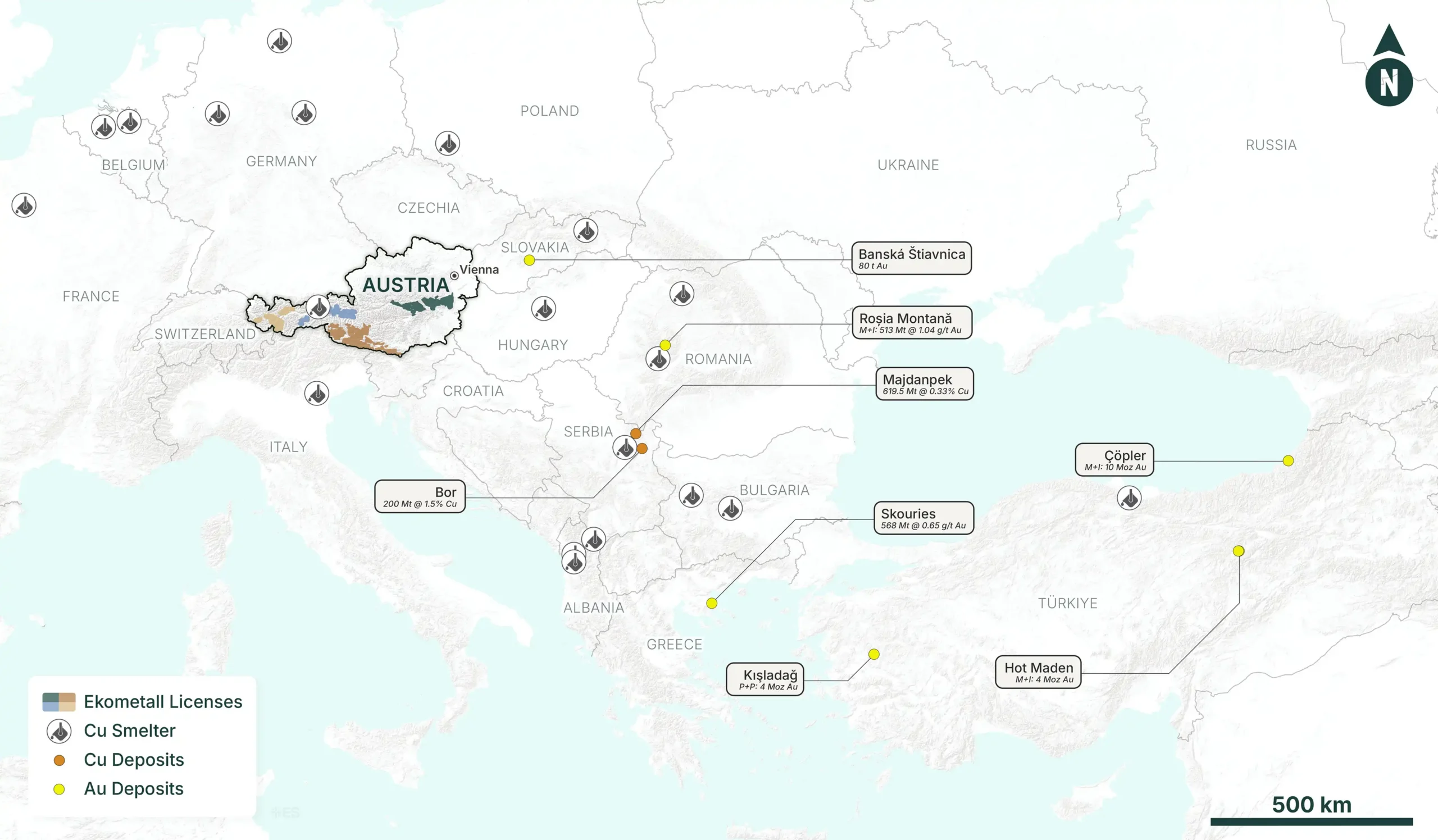
Centuries of documented mineral wealth across Austria’s Alpine districts have never been tested with modern exploration techniques — until now.
~10,000 km²
Strategic Mineral Tenure
275+
Historic Producing Mines
1,500+
Recorded Mineral Occurrences
The Investment Case for Austria
Untested at Scale
Austria’s historic mining districts show strong evidence of mineralization across copper, gold, tungsten, and silver — yet large areas have never been systematically explored with modern geological techniques.
Proven Mineral Systems
The Austrian Alps host multiple mineralized belts that produced metals for centuries. These are not greenfield targets — they are historically validated systems awaiting modern reinterpretation.
At the Centre of European Demand
Austria sits at the geographic heart of Europe, with direct access to smelters, manufacturers, and industrial end-users across Germany, France, and Northern Italy.
Transparent Regulatory Framework
The Austrian Mineral Resources Act provides secure tenure, clear permitting pathways, and predictable timelines — backed by EU rule of law and supported by government authorities actively encouraging mineral exploration.
A Geological Archive Like No Other
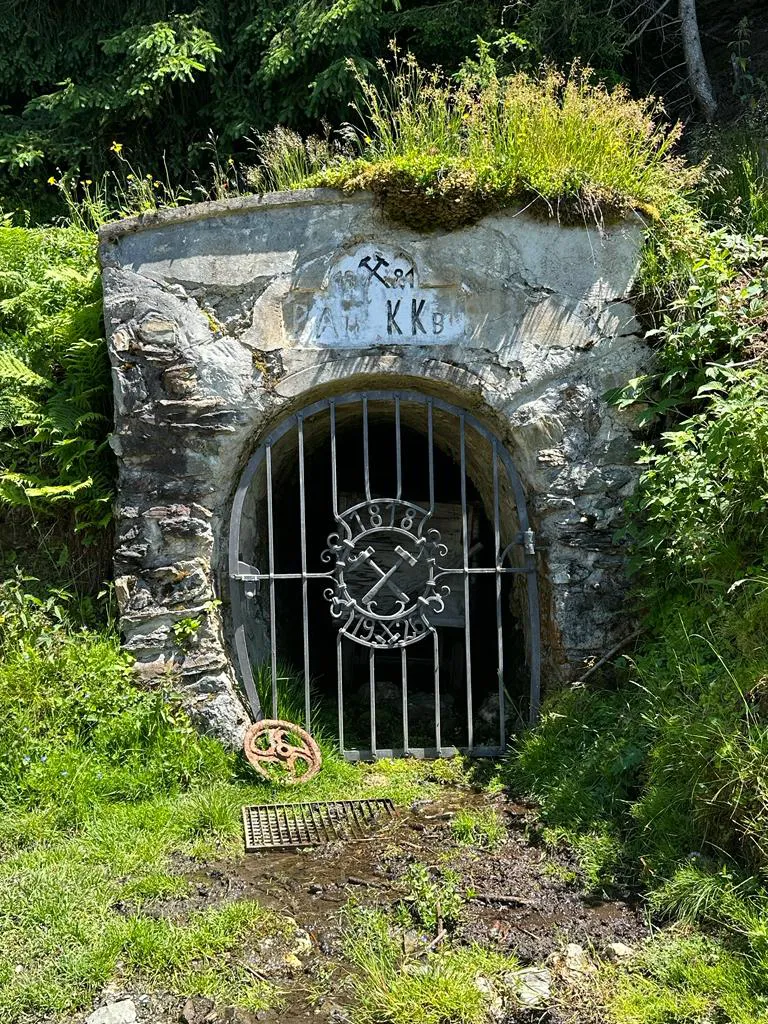
Centuries of mining activity have produced a vast archive of geological reports, mine plans, and assay records — much of it in paper form, in local archives, and in German dialects that have never been digitized or interpreted for modern exploration.
How Ekometall Unlocks the Opportunity
Ekometall combines three structural advantages that no other company in Austria can replicate: an unmatched historical data archive processed through modern AI, a dominant first-mover land position spanning nearly 10,000 km², and an Austrian-based technical team with the local expertise to permit and drill efficiently. Together, these create a repeatable engine for generating drill-ready targets and attracting global joint venture partners.
Built for Joint Ventures
A project generator model that provides global mining partners with permitted, drill-ready targets and in-country execution support — the commercial flexibility to move quickly in a favorable European jurisdiction.
AI-Assisted Target Generation
Ekometall’s workflow uses AI-assisted processing to interpret historical datasets, integrate modern geophysics, and generate prioritized drill targets at a fraction of traditional exploration timelines and cost.
500+ Years of Data, Digitized
Our Austria-based team has digitized and georeferenced hundreds of thousands of pages of historical mining and geological records — transforming centuries of inaccessible archives into a proprietary database of actionable exploration targets.
Dominant Land Position
Nearly 10,000 km² of strategic mineral tenure across Austria’s most historically productive belts — secured early, before the market recognized the opportunity.
Thousands of Years of Mining Culture
Austria’s mining heritage dates back to medieval and Roman times and has shaped the economic and cultural development of many Alpine regions.
Historic mining districts such as Schwaz–Brixlegg (copper and silver), Mittersill (tungsten) and Erzberg (iron ore) demonstrate the region’s long-standing mineral potential.
100,000+
Historical Mining Records
500+ Years
Mining Heritage
1,500+
Recorded Mineral Occurrences
The Opportunity in Summary
Proven Mineral Systems
Alpine mineral belts that produced copper, silver, tungsten, and iron for centuries — geologically validated, commercially underexploited.
An Unmatched Data Archive
Hundreds of thousands of pages of geological records, mine plans, and assay results — digitized by Ekometall and unavailable to any competitor.
A First-Mover Window
No other company has assembled this combination of tenure, data, and local expertise in Austria. The window for first-mover positioning is open now.
From Application to Drill Holes in 8 Months
The Tessenberg Case Study: Proof That Austria's Regulatory Framework DeliversIn 2024, Ekometall set out to permit and execute its first drilling program at the Tessenberg project in Tyrol. Under Austria's MinroG framework, the process moved from initial stakeholder engagement to completed drill holes in approximately eight months — with full community support, independent environmental oversight, and zero permitting delays. Here's how it happened.
Step 1
|
Spring 2024
Stakeholder Preparation
Direct engagement with municipal mayors to build trust, identify affected parties, and establish the relationships that would underpin the entire process.
Early mayor engagement proved decisive — enabling stakeholder identification, local mediation, and contract initiation before the formal process began.
Step 2
|
March 2025
Landowner Assembly
Town hall meeting with all affected landowners and stakeholders. Open forum, face-to-face, no intermediaries.
Step 3
|
April 2025
Work Program Submitted
Complete drilling application filed with the Austrian mining authority — a single, comprehensive submission covering the full planned program.
Step 4
|
June 2025
Hearing & Approval
One oral hearing. One site inspection. Permit granted. No multi-stage consultations, no extended public comment periods, no appeals
Step 5
|
August 2025
Initial Drill Permit Receipt
Approval for first phase
Step 6
|
November–December 2025
Drilling Executed
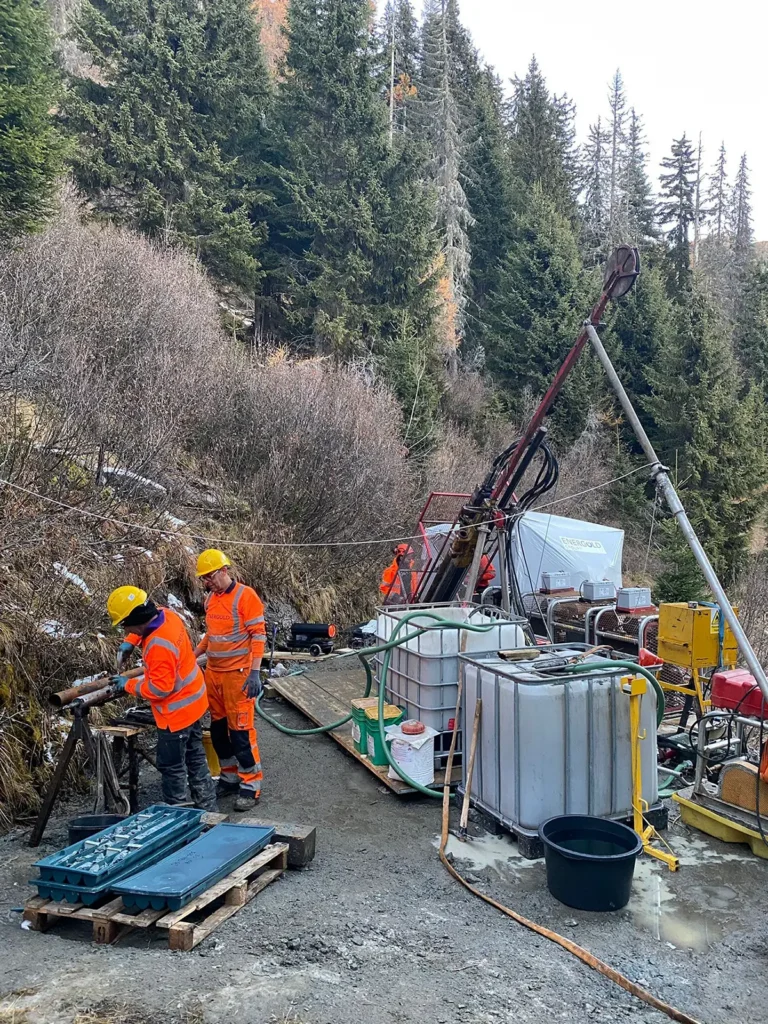
Three drill holes completed using local Austrian contractors, with independent ecological supervision, systematic water monitoring, and full site restoration commitments in place.
~8 Months
Application to Execution
17
Stakeholders Engaged
3
Drill Holes Completed
100%
local first vendor policy
€10K
Bank Guarantee
Why Austria
is Different

Other EU Jurisdictions

Austria (MinroG)